
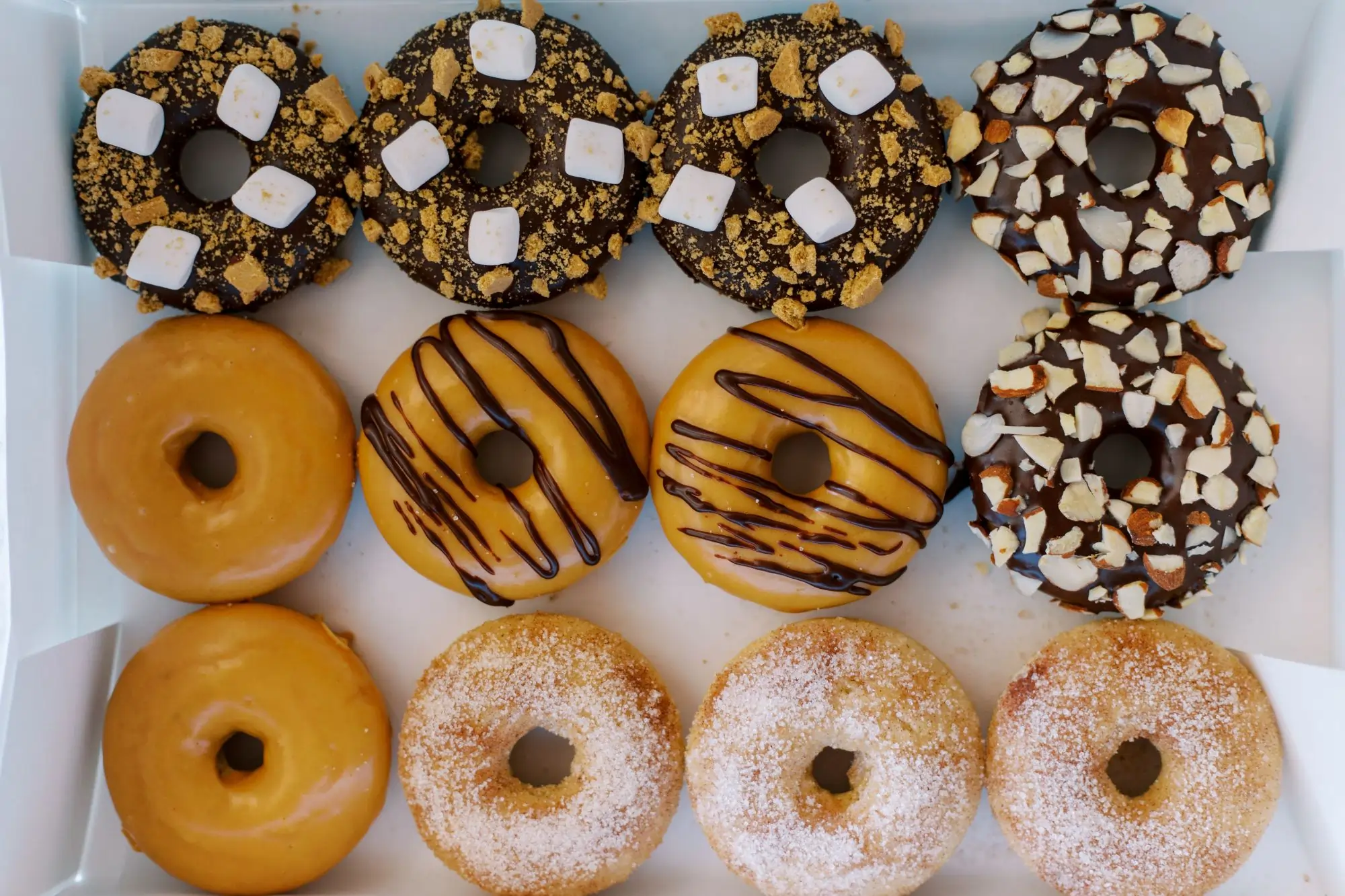
Gluten free and vegan donuts differ from traditional donuts because they use different ingredients that affect dough structure, flavor, and texture. These specialty donuts replace wheat flour or animal derived ingredients with alternatives that behave differently during mixing, proofing, and frying. Understanding these differences helps customers know what to expect before ordering. Many donut shops focus on fresh production and rotating flavors, including Fuzion Donuts, where visitors can review the current menu and available varieties before visiting.
What Makes a Donut Gluten Free
A gluten free donut avoids ingredients that contain gluten, which is a protein found in wheat, barley, and rye. Instead of traditional wheat flour, gluten free donuts rely on alternative flours that do not form gluten structures.
Because gluten helps dough stretch and trap gas during fermentation, removing it changes how the dough behaves. Bakers use different flour blends and preparation techniques to create workable dough while maintaining a soft texture.
Common Gluten Free Flour Alternatives
Gluten free donuts often use flour alternatives that provide structure, moisture retention, and mild flavor. Many recipes combine multiple flours because each ingredient contributes different properties.
Common gluten free flour options include:
-
Rice flour
-
Almond flour
-
Oat flour certified gluten free
-
Sorghum flour
-
Tapioca or potato starch
Blending these ingredients helps replicate the structural properties that gluten normally provides in wheat based dough.
How Gluten Affects Dough Structure
Gluten forms when wheat flour mixes with water and is worked during mixing or kneading. This network gives dough elasticity and strength. It traps gas produced during fermentation, which allows donuts to expand and develop a light interior. Without gluten, dough becomes more fragile. Bakers often rely on starch blends or binding ingredients to support structure during frying.
Texture Differences in Gluten Free Donuts
Gluten free donuts often develop a crumb that differs from traditional wheat donuts. Depending on the flour blend, the texture may feel softer, slightly more delicate, or more cake like.
These changes reflect how alternative flours behave during frying. Bakers adjust hydration and mixing methods to maintain structure while avoiding dense or crumbly results.
What Makes a Donut Vegan
A vegan donut removes animal derived ingredients such as eggs, milk, and butter. Plant based alternatives replace these ingredients so the dough can still mix, proof, and fry properly.
Eggs normally provide structure and moisture, while dairy contributes fat and flavor. Vegan baking replaces these ingredients with plant based alternatives that perform similar roles.
Common Egg Substitutes in Vegan Baking
Egg substitutes help bind ingredients together and contribute moisture to the dough.
Common egg replacements include:
-
Flaxseed or chia seed mixtures
-
Applesauce
-
Commercial egg replacement powders
-
Aquafaba, the liquid from cooked chickpeas
These ingredients support dough cohesion during mixing and frying.
Dairy Free Ingredients Used in Donuts
Vegan donut recipes replace dairy ingredients with plant based alternatives that provide fat and moisture.
Examples include:
-
Almond milk, soy milk, or oat milk
-
Coconut oil or vegetable oil
-
Plant based butter alternatives
These substitutions allow the dough to fry correctly while maintaining balanced flavor.
How Vegan Recipes Affect Texture and Flavor
Removing eggs and dairy changes how donut dough behaves during mixing and frying. Vegan donuts often rely more on plant oils and starches to maintain softness.
The final texture can remain soft and tender, though the crumb structure may differ slightly from traditional donuts.
Key Differences Between Gluten Free and Vegan Donuts
| Feature | Gluten Free Donuts | Vegan Donuts |
|---|---|---|
| Flour type | Uses alternative flours instead of wheat | Often still uses wheat flour unless also gluten free |
| Animal products | May still include eggs or dairy | Avoids all animal derived ingredients |
| Dough structure | Lacks gluten network and relies on starch blends | Uses plant based ingredients in place of eggs and dairy |
| Common texture differences | Often softer or more delicate crumb | Texture varies depending on ingredient substitutions |
Common Misconceptions About Specialty Donuts
Specialty donut labels often cause confusion because they refer to different ingredient restrictions. Understanding these differences helps customers make informed choices when ordering.
Gluten Free Does Not Always Mean Vegan
Gluten free refers only to the absence of gluten containing grains. A gluten free donut may still contain eggs, milk, or butter. Because of this, gluten free products are not automatically vegan.
Vegan Does Not Always Mean Gluten Free
Vegan products remove animal ingredients but may still contain wheat flour. Wheat flour contains gluten, which means many vegan donuts still contain gluten. Customers avoiding gluten should confirm the flour used rather than relying only on the vegan label.
Texture and Structure Differences Compared to Traditional Donuts
Both gluten free and vegan donuts may feel slightly different from traditional donuts made with wheat flour and eggs. Ingredient substitutions change how the dough expands, holds moisture, and forms structure during frying. These differences are normal when working with alternative ingredients.
Ingredient and Preparation Considerations
Specialty donuts often require adjustments in mixing, proofing, and frying techniques. Alternative flours absorb moisture differently than wheat flour, and plant based ingredients react differently during fermentation and cooking.
Bakers may adjust hydration levels, mixing times, or proofing conditions to maintain dough stability. Frying temperature may also require careful control because different ingredients brown at different rates.
These adjustments help maintain consistent texture and appearance. Customers interested in current donut varieties can review the available menu options at Fuzion Donuts fresh donut menu before visiting.
What Customers Should Look For When Ordering Specialty Donuts
Customers interested in gluten free or vegan donuts should review a few details before ordering.
Things customers should check when ordering gluten free or vegan donuts:
-
Ingredient transparency
-
Dedicated preparation areas or cross contamination policies
-
Texture expectations compared to traditional donuts
-
Availability and limited production runs
These factors help customers understand both ingredient composition and production methods.
Do All Donut Shops Offer Gluten Free or Vegan Options
Not every donut shop offers gluten free or vegan donuts. Specialty donuts often require different ingredients, preparation processes, and production scheduling.
Some bakeries focus on traditional recipes because those methods match their equipment and workflow. Others produce specialty donuts only on certain days due to ingredient sourcing or preparation requirements.
What to Expect When Visiting Fuzion Donuts
Customers interested in fresh donuts can review nearby shops before visiting. Checking store locations helps confirm operating hours and available shops. You can view where to find Fuzion Donuts locations before planning a visit.